Add your promotional text...


What to Look for When Purchasing a Good Pair of Hiking Boots (For Men & Women)
Learn what to look for when buying men’s or women’s hiking boots, including fit, materials, traction, support, and durability to stay comfortable and confident
5/8/20243 min read
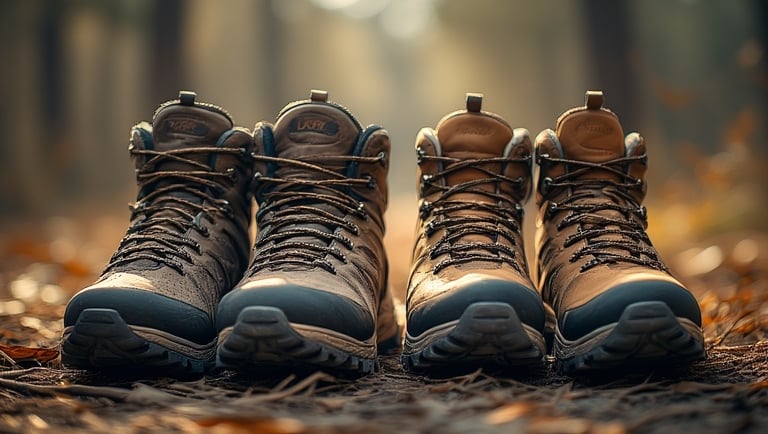

Finding the right pair of hiking boots can make or break your outdoor experience. Whether you're trekking through rocky mountain paths or strolling along forest trails, your boots are your greatest source of support, protection, and comfort. With so many styles, fits, and features available, knowing what to look for can help you choose footwear that lasts—and keeps you confident on every adventure.
This guide covers the essential factors to consider when buying hiking boots for both men and women, along with tips to help you choose the perfect fit.
1. Choose the Right Boot Type for Your Hiking Style
Not all hiking boots are built the same. Selecting the right category ensures long-term comfort and trail performance.
• Day Hiking Boots
Great for shorter hikes and well-maintained trails. These boots are typically lightweight and flexible.
• Backpacking Boots
Designed for long distances, rugged terrain, and carrying heavier loads. They offer more ankle support and a stiffer sole.
• Trail Shoes
Low-cut, lightweight, and ideal for casual hikes or fast-paced walking. They provide comfort similar to running shoes.
Men and Women Differences:
Women’s boots often feature narrower heels and slightly different arch support, while men’s boots typically have wider toe boxes. Choose based on fit—not gender labels alone.
2. Check the Boot Material
Boot materials directly impact durability, weight, breathability, and weather resistance.
• Full-Grain Leather
Extremely durable and ideal for rugged terrain. Great for experienced hikers or multi-day treks.
• Split-Grain Leather & Nylon
Lighter and more breathable—perfect for warm weather and casual hiking.
• Synthetic Materials
Break in quickly, cost less, and are lighter, though they may not last as long.
• Waterproof Membranes (GORE-TEX®, eVent)
Keeps feet dry in wet conditions, but may reduce breathability in hot weather.
3. Prioritize Comfort and Fit
A comfortable fit is the most important factor in choosing a hiking boot.
Key Fit Tips:
Your toes should have wiggle room yet feel secure.
Your heel should stay in place with no slipping.
Wear hiking socks when trying boots on.
Walk uphill and downhill to test pressure points.
Always size up slightly if you plan to wear thicker socks.
Pro Tip: Try boots later in the day when your feet are naturally more swollen.
4. Look at the Boot’s Support & Structure
Proper support helps protect your feet and ankles on uneven terrain.
• Midsole
The boot’s cushioning and shock absorption.
EVA: Softer, lighter, more flexible.
Polyurethane: Firmer, more durable, great for rough trails.
• Shanks & Plates
Add stability and protect your feet from rocks, roots, and hard impacts.
• Ankle Support
High-cut boots are best for rough terrain or heavy loads. Mid-cut offers a balance of flexibility and protection.
5. Consider Outsoles & Traction
Your boot’s outsole determines grip and stability.
What to Look For:
Deep, aggressive lugs for muddy or rocky trails.
Wider lugs for mixed-terrain versatility.
Rubber hardness—softer rubber grips better but wears faster.
For wet, slippery surfaces, Vibram soles or similar high-traction designs perform best.
6. Pay Attention to Weight
Heavier boots offer more durability and support, but they can fatigue your legs. Lighter boots are great for speed, comfort, and short hikes.
Choose weight based on the distance, conditions, and gear you typically carry.
7. Break-In Period Matters
High-quality boots need time to mold to your feet. Break them in before long hikes by wearing them on shorter walks or around the house.
Synthetic boots break in quickly; full-grain leather usually takes longer.
8. Men’s vs. Women’s Hiking Boots
While many features overlap, consider these differences:
Men’s Boots
Often wider overall
Slightly heavier materials
Larger sizing range
Women’s Boots
Narrower heel cups
More sculpted arch support
Lighter weight options
Always choose what fits your foot best—even if it’s a boot marketed to another gender.
9. Don’t Ignore Reviews & Brand Quality
Reliable brands often deliver consistent support, durability, and fit. Look for customer reviews that mention mileage, comfort, break-in time, and performance in specific terrains.
10. Try Before You Buy
If possible, test boots in person—walk on ramps or uneven flooring to feel how they respond. When purchasing online, make sure there’s a return policy in case the fit isn't perfect.
Final Thoughts
A great pair of hiking boots is an investment in your comfort, safety, and enjoyment on the trails. By evaluating boot type, materials, fit, support, and traction, you’ll be well-prepared to choose footwear that matches your hiking style. Whether you’re a beginner or a seasoned explorer, the right boots will help you travel farther, feel stronger, and stay protected on every adventure.
Receive email notifications of new posts, trail tips and updates straight to your inbox.
Contact us at:
Follow us at:
contactus@exploretrailways.com
© 2025. All rights reserved.