Add your promotional text...


Hiking the 2-Day Inca Trail to Machu Picchu: My Journey Through the Andes
Inca Trail in Peru
5/30/20244 min read
Hiking the 2-Day Inca Trail to Machu Picchu: My Journey Through the Andes
If there’s one hike that forever changed the way I feel about mountains, it’s the 2-Day Inca Trail to Machu Picchu. Short enough to fit into a long weekend, yet breathtaking enough to feel like a true expedition, this trek blends adventure, culture, and jaw-dropping scenery into one unforgettable journey.
Below is my full experience — what I saw, the trail difficulty, logistics, fees, and tips for anyone planning to walk these ancient paths themselves.
Sunrise on the High Andes — Day 1
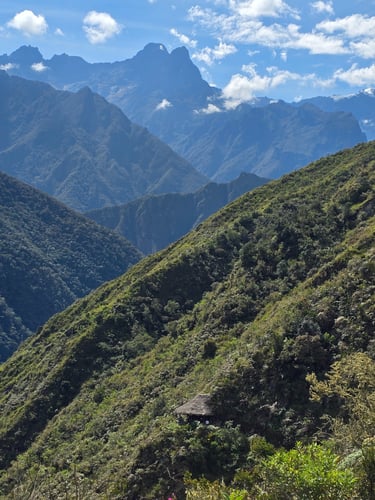
Me and my guide began at the KM 104 trailhead, reached by an early train ride along the Urubamba River. The moment we stepped off; the mountains rose like massive green walls around us. Mist drifted in and out of the tree canopy, giving the trail a dream-like feel — the perfect welcome to the Andes.
Along the way I saw glimpses of mist-shrouded peaks, dense green foliage, and occasional birds calling from the treetops. The air was cool and thin; even though this 2-day route is more moderate than the classic 4-day trek, the altitude and terrain still demanded respect and energy. The path was uneven and rocky in places, with frequent uphill and downhill sections — more challenging than a simple walk, though not extreme mountain climbing. Many hikers described the difficulty level as “moderate.” Even seasoned hikers took breaks, and my guide reminded me often to hydrate and enjoy the journey.
What I Saw Along the Way
Chachabamba Ruins – Our first ancient site, surrounded by lush jungle.
Dense Cloud Forest – Colibrí hummingbirds, wild orchids, and moss-covered branches.
High-Andean Views – Deep valleys and towering peaks every time the clouds parted.
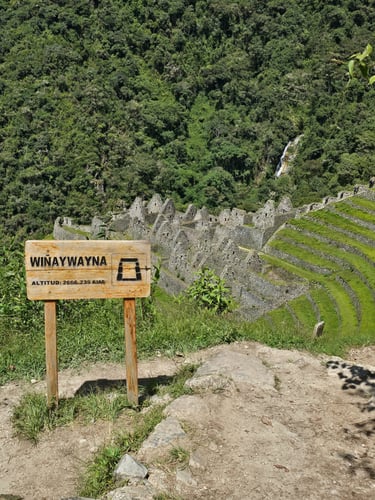
By midday we reached the highlight of the hike: the stone ruins of Wiñay Wayna. Ancient terraces cling to the hillside, and the ruins sit dramatically above the valley floor — a surreal combination of jungle and Inca stonework. The view from there, looking down over steep green slopes toward distant peaks, is something I’ll never forget.
As the afternoon advanced, we descended gently toward Aguas Calientes, the small town that acts as a gateway to Machu Picchu. That night we slept in a modest but comfortable hotel in Aguas Calientes — a nice contrast to tents and hard ground. Many 2-day tours use a 3-star hotel there.
Arrival at Machu Picchu — Day 2
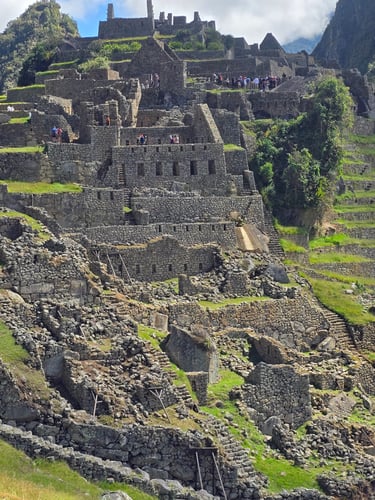
The next morning and a short bus ride from Aguas Calientes took us up to the entrance of Machu Picchu. The clouds hung low over the Andean ridges, and then — as the sun rose — they parted to reveal the terraces, temples and stone structures of Machu Picchu laid out beneath us, green jungle rising into the mist beyond.
Walking among the ruins, I was struck by how seamlessly these structures blend into the natural landscape. Terraced slopes, stairways carved into rock, stone walls that have withstood centuries — it’s more than a ruin, it’s a testament to the ingenuity of the builders.
My guide walked me through temples, agricultural terraces, and ceremonial zones, explaining how engineering, spirituality, and astronomy shaped the layout of the citadel. Even with its popularity, there were moments where I paused, breathed in the thin mountain air, and felt completely connected to the people who built this masterpiece centuries ago.
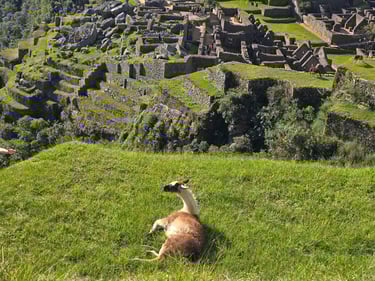
From certain vantage points the view was jaw-dropping — jungle-draped mountains rising steeply around a valley deep below, with layers of mist and morning light shifting over ruin and forest.
Hiking Difficulty and What You Should Know Before Going
Difficulty: The 2-day Inca Trail is often described as moderate. It covers around 10–12 km (6–7.5 miles) on the first day, on uneven and often steep terrain, including many stone steps and ups/downs.
Fitness Level: You don’t need to be an elite athlete — but being reasonably fit helps. If you’re comfortable walking on hilly terrain for several hours with a daypack, you’ll probably manage fine.
Altitude & Acclimatization: Even though this route is less demanding than the classic four-day trek, you’ll still gain altitude and traverse mountain paths. It’s smart to spend a day or two acclimatizing (e.g. in Cusco) before starting. Many tour operators recommend this.
What’s Included (in many standard 2-day tours): Licensed guide; entrance permits for the Inca Trail + Machu Picchu; transport (train + bus) from the start or from Aguas Calientes; one night’s hotel in Aguas Calientes; usually some meals (often lunch/dinner on Day 1 and breakfast Day 2).
What’s Optional / Extra: Additional hikes (such as climbing Huayna Picchu Mountain or Machu Picchu Mountain for broader viewpoints) — these often come with extra fees.
Permits & Booking Is Essential: Access to the trail (and Machu Picchu) is regulated: you must go through an authorized tour operator and carry your passport to the checkpoint. Independent trekking is not allowed. Booking early — especially if you plan to go during the high season (May to September) — is very strongly recommended. \\
What I Took (and What You Should Bring)
Comfortable hiking shoes (or boots), with good grip — because the stone steps and rocky terrain can get slippery.
Light daypack (no heavy camping gear — the 2-day version doesn’t require you to carry a tent).
Water bottle, snacks — energy bars, nuts, dried fruit for boosts during the hike.
Rain protection (poncho or rain jacket) — the weather in the Andes can be unpredictable, often shifting between sun, mist, and sudden showers.
Sunscreen, hat, sunglasses — the high-altitude sun can be intense.
Passport (or valid ID) — mandatory for the entry checkpoint and for Machu Picchu entrance.
Final Thoughts: A Journey Worth Every Step
Even though the 2-day route is relatively short, it feels like a true adventure. You get a taste of trekking through Andean jungle, walking Inca-built stone paths, and arriving at the legendary Machu Picchu in a way that feels old-world and meaningful. The dramatic scenery, the sense of history, and the physical effort combined to make arriving at Machu Picchu feel earned.
Standing atop those ancient terraces, watching clouds and mountains swirl around the ruins, I felt part of something timeless. You don’t have to commit to the 4-day trek to have a profound experience — the 2-day route delivers its own magic.
For more hiking tips, beginner guides, outdoor gear advice, and trail recommendations, be sure to explore more articles on Explore Trailways. Happy hiking!




Receive email notifications of new posts, trail tips and updates straight to your inbox.
Contact us at:
Follow us at:
contactus@exploretrailways.com
© 2025. All rights reserved.